Touché Amoré’s Nick Steinhardt & Clayton Stevens Talk Guitars, Tone, Recording

Since 2007, Touché Amoré has been honing their craft with their own unique blend of influences that has taken the five-piece band around the world many times over. The Music Zoo's Jordan Usatch speaks with guitarists Clayton Stevens and Nick Steinhardt about their gear, writing processes & more!
Watch our hour-long interview now where Clayton and Nick talk about their influences as individual guitarists, the songwriting practices that contribute to Touche's records, the gear they like to use on the road, and what it's like recording guitars with the legendary producer Ross Robinson.
Have a question?
Contact us at 516-626-9292 or sales@themusiczoo.com
Watch it & read it
Touché Amoré's Power in Single-Coils: Guitar Interview with Clayton Stevens & Nick Steinhardt · 55:36 · 14 chapters
Chapter 1 · 0:00
Brazil, Stage Four & The Touche Amore Story
Nick Steinhardt and Clayton Stevens discuss the band's recent Stage Four tour stop in Brazil before looking back at Jordan's first Touche Amore show and the band's live intensity.
From the video
We got to play in what seemed like kind of the historic venue. Little bit of a step up from the last one in terms of size.
I've seen you guys over the years so many times. I think my first Touche show was the 285 Kent show in like 2013.
Chapter 2 · 2:13
Guitar Influences & Finding Their Roles
Clayton and Nick trace their early guitar influences, from Green Day and the Ramones to Sonic Youth, Television, AFI and Rage Against the Machine, and explain how those influences shaped their roles in the band.
From the video
The Ramones ... was a huge influence on me guitar-wise. And then Sonic Youth kind of took my brain to another place in terms of what guitar could do.
I play more of the rhythm in the band, but we do kind of trade off and also sort of approach the guitar from more of like a Sonic Youth or Television guitar attack.
Chapter 3 · 8:09
Why Touche Amore Became a Single-Coil Band
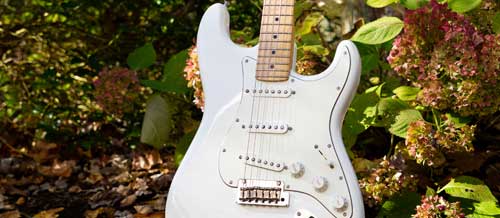
The band explains its long-running commitment to Fender guitars, single-coil pickups and offset instruments, and why humbuckers rarely fit the sound they developed together.
From the video
I've been a Fender guy like I'd say like almost day one. Like my first guitar was a Strat.
Something about the Telecaster, the Strat, and the Jazzmaster, and of course, the Jaguar. All of them have that percussive element.
Chapter 4 · 12:14
Vintage Gear, Poison the Well & Guitar Aesthetics
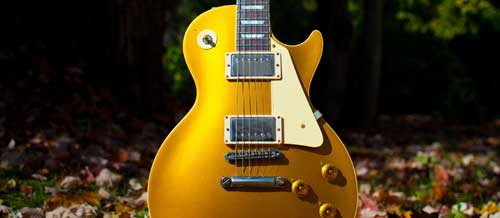
Nick talks about buying a Les Paul Artisan after seeing Poison the Well's Ryan playing one, while the band discusses the influence of classic-rock gear choices on their sonic and visual identity.
From the video
I had bought it because I saw him playing that guitar and loved it. I've tried it in Touche. It's never sounded right.
Their choices of gear ... made their sound change more authentic and interesting and was definitely in a way ... inspiration in terms of vintage aesthetic.
Chapter 5 · 14:22
Writing Melodic Intros & Turning Ideas Into Songs
Nick and Clayton break down the origins of melodic Touche Amore intros such as Flowers and the Stage Four opener, describing how simple ideas can become fast, dynamic songs.
From the video
There are these chords we can play and then we made a punk song out of it. So in that one the intro came first.
Once we figured out what I had brought in as a slow thing into a fast thing that song came together very easily.
Chapter 6 · 17:03
Open Tunings & The Touche Amore Songwriting Process
The band discusses its E-flat tunings, open-string approach and the collaborative process of bringing ideas into a room and developing them together.
From the video
E flat with the G dropped another half step. And it's like a drone note sort of situation.
Number one most important though definitely is everyone in the room together feeling it ... It all needs to be worked out in the room together.
Chapter 7 · 19:06
How Stage Four Came Together
Nick and Clayton explain how Stage Four was written in two batches, how Jeremy's lyrics entered the process, and why the band intentionally embraced simpler, more open arrangements.
From the video
It was definitely like in two chunks. Like, it wasn't like we stopped writing for a while, but it was like there was a point where Jeremy wanted to have a documentation of the songs that he can then write to.
I just want this to sound more open and feel like there's space for the songs to breathe.
Chapter 8 · 24:42
Stage Four Guitars, Amps & Pedals
The band details the guitars, amps and pedals used on Stage Four, including the Lone Star, Twin, boutique amps, JHS Double Barrel, Full-Drive and specialized effects for Rapture.
From the video
The main amps at the time ... was Lone Star and a Twin. And then Brad has a few ... like a little Trainwreck amp that he has.
The guitar lead specifically was just this super dense like wet ethereal thing, but wanted like the main melody to come through.
Chapter 9 · 27:41
Recording With Ross Robinson
Nick and Clayton describe recording guitars with Ross Robinson, his detail-oriented approach, and the vintage pedals and amplifiers that became the foundation of their guitar sounds.
From the video
He's an absolute pleasure to do guitar tracking with because ... he's a very detail oriented person and when he hears something in his head, he will chase it until he finds it.
A very old Rat, a very old TS 808, and a very old Memory Man. And those three things are on every guitar track probably for both of us.
Chapter 10 · 34:34
Playing Loud, Effects & Committing Sounds to Tape
The band explains Ross Robinson's preference for loud amplifiers, layered effects and full-song performances, along with his commitment to printing guitar sounds rather than leaving them open for later reamping.
From the video
He wants you to perform it. It's really cool. Everything from ... press the pedal at this time ... whatever it takes to get to a sound.
The sounds are going to be committed sounds to tape.
Chapter 11 · 37:54
From Fender Twins to Hiwatt Live
Clayton discusses his long relationship with Fender Twin Reverbs and his move to Hiwatt, while Nick explains how his Mesa Lone Star has remained a core part of his live rig.
From the video
I've been playing Twin Reverbs ... Fender has always been a big part of the sound and getting the sound from the floor as we've been kind of discussing with pedals and stuff.
Hiwatt is kind of once I was able to get introduced to the people at Hiwatt and try one out, I was just completely blown away.
Chapter 12 · 41:18
Reliable Gear & The Case Against a Silent Stage
The band talks about practical live gear, the reliability of Boss pedals and Fender combo amps, and why the physical energy of loud amplifiers remains important to their live performance.
From the video
It's just it just works. It really does the thing.
There's just never going to be anything like feeling an amp in the room and the feeling of the air pushing against you.
Chapter 13 · 48:21
Modeling, Helix & The Player Behind the Tone
Nick and Clayton discuss modeling technology, Helix rigs and the importance of a guitarist's hands and musical identity, using players such as Kurt Ballou and Brian Baker as examples.
From the video
I helped produce a friend's record a few months ago and we did basically all modeling guitar and absolutely loved it for making records and just being creative.
You could buy all the gear in the world ... you're going to sound like yourself 99% of the time.
Chapter 14 · 50:40
What's Next, Fantasy Rigs & 20 Years of Touche Amore
The conversation closes with plans for new music and more touring, desert-island gear choices, the band's approach to longevity, and advice for younger musicians.
From the video
We definitely want to work on new music ... I think we're in a really good place as people in a band together and having a lot of fun playing right now.
You just got to be kind to each other ... just be good people at the end of the day.
Follow your instincts and don't worry about what other people are doing ... staying true to who you are is the most important thing possible.